

Business Insight is a platform dedicated to helping entrepreneurs, brands, and businesses grow through actionable strategies, marketing insights, business resources, and growth-focused guidance designed to turn ideas into scalable success.
Popular articles

20 Psychological Triggers That Make Customers Buy Faster
Every buying decision — no matter how rational it seems — begins in the emotional, subconscious brain. Logic comes after. What triggers the emotional brain to move toward a purchase are specific, predictable psychological mechanisms that have been studied and proven across decades of consumer research.
Understanding and ethically applying these triggers is not manipulation. It is communication that speaks to how humans actually make decisions — rather than how we wish they did.
Here are 20 of the most powerful.
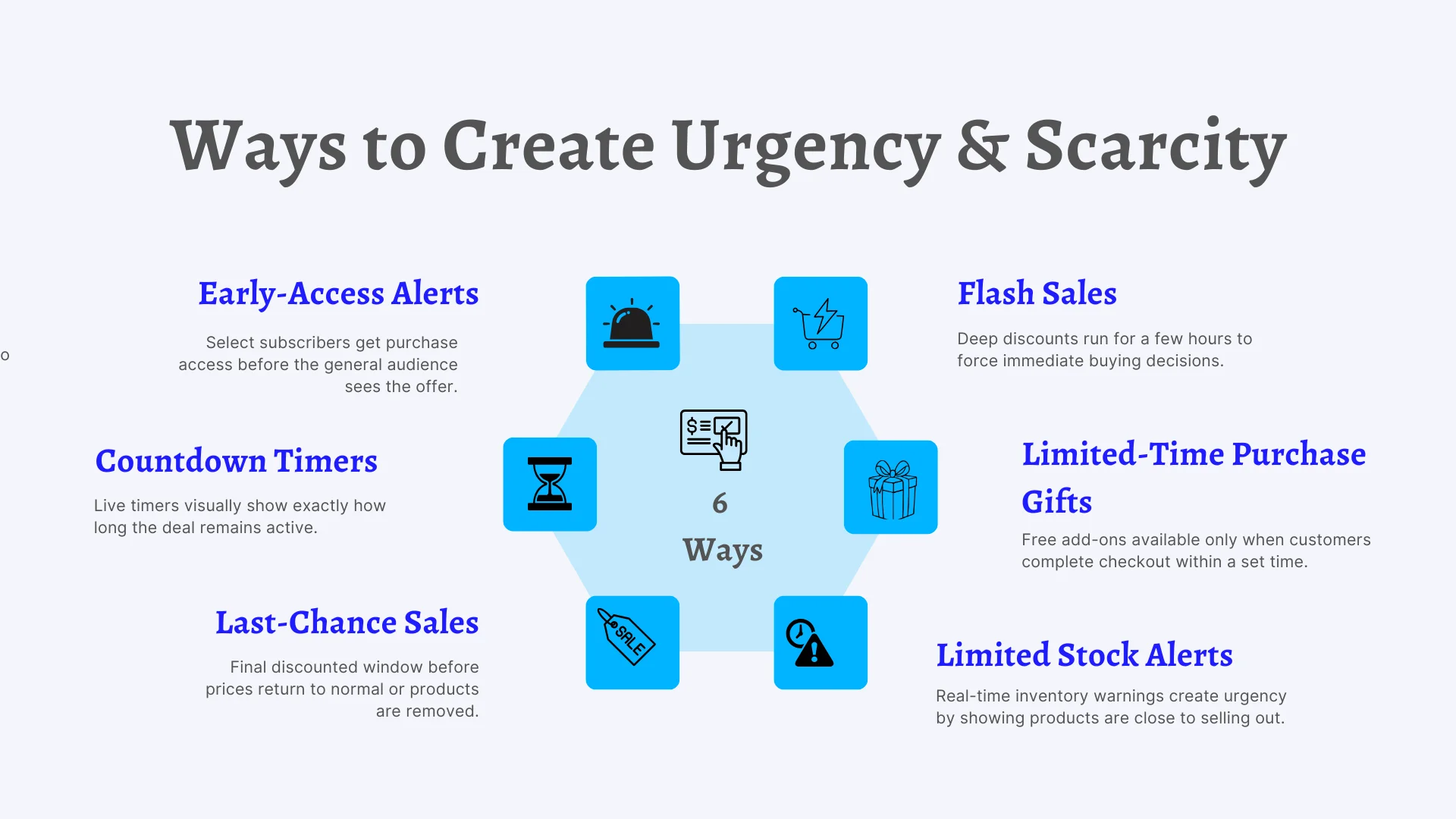
1. Scarcity When something is limited in quantity, the human brain assigns it greater value. "Only 3 spots remaining" activates loss aversion — one of the most powerful motivators in human psychology.
How to implement: Create genuinely limited availability for your offers — limited cohort sizes, limited service slots per month, limited product runs. Communicate this limitation clearly and honestly.
2. Urgency A deadline forces a decision. Without urgency, "I'll think about it" becomes "I forgot about it." A real deadline — a price increase date, an enrolment closing date, a bonus expiry — creates the motivation to decide now rather than later.
How to implement: Use Deadline Funnel to add real, personalised countdown timers to your emails and sales pages.
3. Social Proof The brain uses other people's behaviour as a guide for safe decisions. Reviews, testimonials, follower counts, client logos, and case studies all signal: "Other people have done this and it was the right decision."
How to implement: Display your best testimonials prominently. Show the number of clients served, products sold, or results achieved. Use real names and real results.
4. Authority People defer to experts. Credentials, certifications, media features, published content, and confident, specific language all signal authority and reduce the fear of making a wrong decision.
How to implement: List every relevant credential, press mention, and certification. Publish educational content consistently to build perceived expertise over time.
5. Reciprocity When you give something of genuine value first — a free guide, a useful tip, a sample — the recipient feels a deep, natural impulse to give something back. Businesses that lead with generosity convert at dramatically higher rates.
How to implement: Create a genuinely useful lead magnet and give it away freely. Provide one piece of high-value content before making any ask.
6. Liking People buy from people they like. Brands that are warm, human, relatable, and personable generate more loyalty and more sales than those that are cold and corporate.
How to implement: Show the real people behind your brand. Share your story, your values, and your personality authentically across your content.
7. Commitment and Consistency Once someone makes a small commitment — following your account, downloading your freebie, answering a question — they are far more likely to make a larger commitment later. The brain wants to remain consistent with past actions.
How to implement: Design micro-commitments into your funnel — a free download, a webinar registration, a quiz — before asking for a purchase.
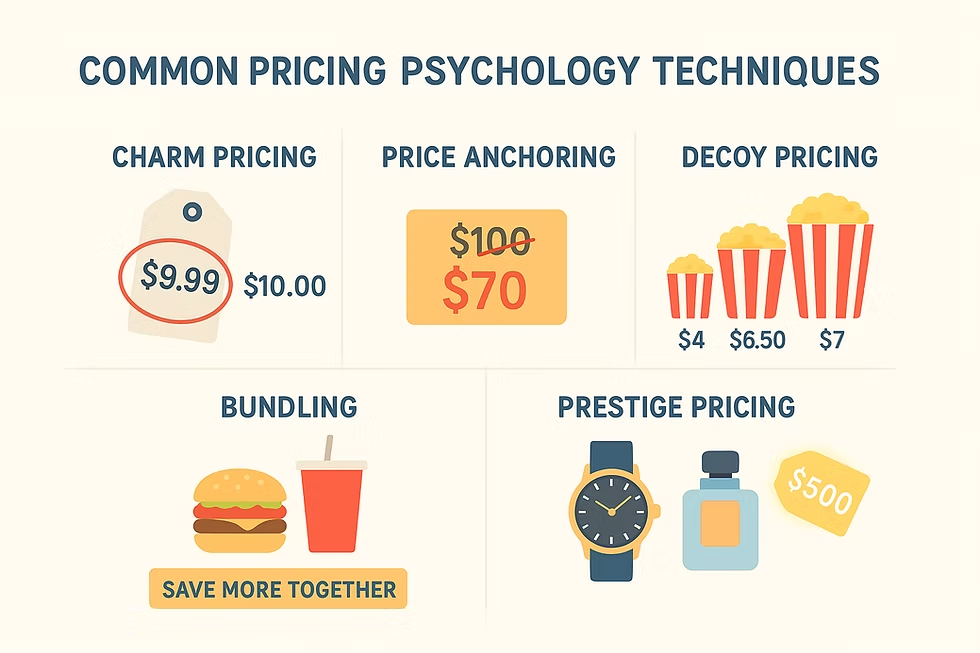
8. Price Anchoring The first price a customer sees sets the reference point for all subsequent prices. Show a higher-priced option first, and your actual offer feels more reasonable by comparison.
How to implement: Present your pricing in tiers — show your premium offer first, then your standard offer. The standard will feel like a bargain.
9. Loss Aversion Research consistently shows that the pain of losing something is roughly twice as powerful as the pleasure of gaining the equivalent thing. People are more motivated to avoid loss than to achieve gain.
How to implement: Frame your offer around what the customer stands to lose by not acting — revenue left on the table, time wasted, competitors gaining ground — not just what they'll gain.
10. The Bandwagon Effect When people see that others like them are buying, they want to join in. "Join 2,000 entrepreneurs already growing with us" is more compelling than any feature list.
How to implement: Display your community size, client count, or volume of sales prominently. Update these numbers regularly.
11. Specificity Specific claims are more believable than general ones. "We helped a client increase their revenue by 47% in 90 days" is more credible than "We help businesses grow significantly."
How to implement: Quantify every claim you make. Replace vague adjectives with real numbers wherever possible.
12. The Contrast Principle When two things are presented side by side, their differences are amplified. Showing the before state (problem, cost, pain) directly alongside the after state (solution, savings, outcome) makes your offer feel dramatically more valuable.
How to implement: Structure your sales copy with a clear before/after contrast. Show the cost of the problem before showing the cost of your solution.
13. Storytelling The brain processes stories differently from facts — they activate emotion, memory, and connection simultaneously. A well-told customer success story is more persuasive than a feature list.
How to implement: Tell every testimonial as a short story: the situation before, the challenge, the decision to buy, and the result after.
14. The Halo Effect A positive impression in one area creates a positive bias across all areas. A premium-looking website, professional photography, and polished design make every other aspect of your business appear more credible and high-quality.
How to implement: Invest in the visual quality of your brand. The perception of quality in aesthetics transfers to the perception of quality in your product.
15. Fear of Missing Out (FOMO)The anxiety of potentially missing a valuable experience or offer is a powerful purchase motivator — particularly when combined with social proof and scarcity.
How to implement: Show who is already inside, what results they're getting, and what a new buyer stands to gain — with a deadline for action.
16. The Zeigarnik Effect The brain is more engaged with incomplete tasks than completed ones. Starting a journey — beginning a free trial, completing step one of a process — creates a natural pull to finish it.
How to implement: Design multi-step opt-in processes, quizzes, or onboarding flows that begin a journey. The desire to complete the journey increases conversion.
17. Familiar Language Using the exact words your customers use to describe their own problems in your marketing copy creates an instant feeling of "this brand understands me" — which is the most powerful feeling in sales.
How to implement: Survey your best customers. Ask: "What problem were you experiencing before you found us?" Use their exact phrases in your marketing.
18. Risk Reversal Every purchase involves perceived risk. The more you can eliminate that risk — through guarantees, free trials, or satisfaction policies — the lower the barrier to purchase becomes.
How to implement: Offer a money-back guarantee, a free first session, or a results-based promise on your primary offer.
19. The Power of Because Research by psychologist Robert Cialdini shows that giving a reason for your ask — even a simple one — dramatically increases compliance. People need to understand why before they act.
How to implement: Always give a reason for your urgency, your pricing, your offer, and your call to action. "We're limiting spots to 10 because we want to give every client personalised attention" is far more compelling than "Limited spots available."
20. Identity Alignment The most powerful purchase trigger of all is when a product or brand aligns with who a customer believes they are — or aspires to be. When buying your product feels like an act of becoming who they want to be, the sale is almost inevitable.
How to implement: Define the identity of your ideal customer. Build your brand, your language, and your visual presence around reflecting that identity back to them.
"You are not selling a product or service. You are giving someone a reason to take an action that serves their goals. Understanding their psychology is how you do that ethically and effectively."
🔥 Let Psychology Work For Your Business
Sales Elite Agency builds marketing and sales systems that ethically leverage these psychological principles at every stage of the customer journey — from first impression to final purchase. The result is a business that converts more consistently and more profitably.
📩 Work With Sales Elite Agency — Build a Psychology-Driven Sales System →]
Subscribe to unlock premium content
Learn how to attract clients, increase sales, and scale faster.
Why Most Businesses Stay Broke Even With Good Products

Why Most Businesses Stay Broke Even With Good Products
Why Most Businesses Stay Broke Even With Good Products